Concrete doesn’t “go bad.” The ground under it does.
When a driveway, patio, or sidewalk starts pitching the wrong way, the slab is usually fine structurally, it’s just lost support. Concrete leveling restores that support by injecting material under the slab, lifting it back where it belongs with far less mess than demolition.
And yes, it can look a little like magic the first time you see it.
So what’s actually happening under the surface?
Picture your slab like a rigid tabletop. If one leg sinks into soft soil, the top tilts. Concrete leveling restores uneven slabs by rebuilding the missing “leg” by filling voids under the slab.
Most contractors do this with one of two families of materials:
– Cementitious grout (mudjacking/pressure grouting): heavier, more traditional, often great for larger commercial slabs
– Polyurethane foam (polyjacking): lighter, fast-curing, high control, usually smaller injection holes
Both approaches rely on the same idea: controlled injection pressure + a material that flows into empty space = lift and support.
Now, this won’t apply to everyone, but if you’ve got a slab that’s shattered into multiple moving pieces, leveling isn’t “repair,” it’s lipstick. That’s where replacement starts to make more sense.
Hot take: Tearing out concrete is wildly overprescribed
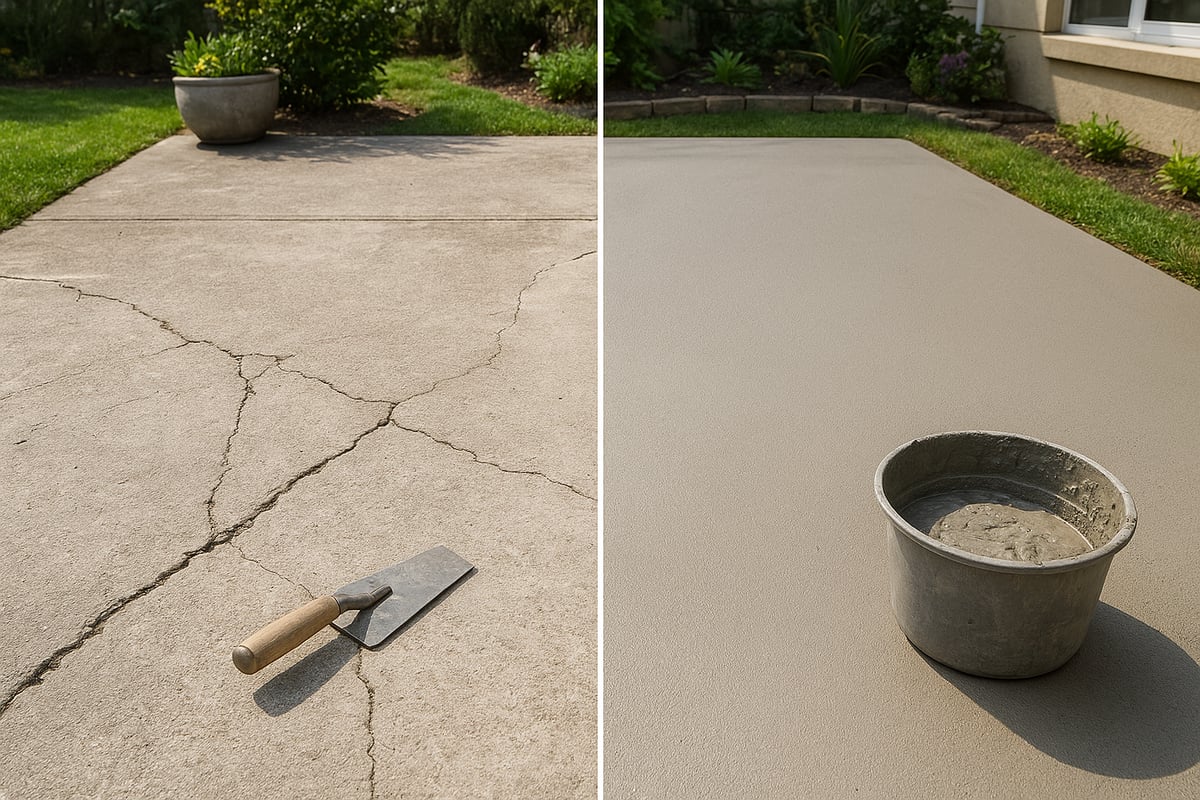
I’ve seen homeowners get pitched full replacement when the slab is basically intact and just needs its subgrade restored. Demolition has its place, sure. But it’s loud, expensive, slow, and it trashes landscaping in the process.
Leveling is often the more adult choice: fix the cause (lost support) and keep the slab you already paid for.
One line, because it’s true:
A level slab is mostly a soil problem, not a concrete problem.
The process (what a good crew actually does)
Some contractors make this sound like “drill holes, pump stuff, done.” That’s the sloppy version. The controlled version looks more like a surgical procedure.
1) Measure and map the slab
Laser level, string lines, digital levels, whatever the crew uses, they should be able to show you high points, low points, and target elevations. Guessing is how you get over-lifted corners and weird humps.
2) Pick injection locations based on load paths
This is one of those technical details that separates pros from people with rented gear. You don’t just inject where it’s low, you inject where support is missing and where the slab will respond predictably.
3) Drill small access holes
Foam leveling often uses smaller holes than grout methods. Either way, holes get patched afterward, but you should expect to see them (anyone promising “invisible” patches is selling optimism).
4) Inject in stages, watching lift in real time
Here’s the thing: lifting isn’t brute force. It’s pressure + patience. Skilled techs pulse material in, let it move and settle, then add more. They’re watching for binding, cracking, or the slab “bridging” over a void without actually filling it.
5) Patch, clean, and verify final grade
Final elevations should be checked again, especially at transitions like garage floors, steps, door thresholds, and drain paths.
A quick stat, because people always ask about longevity
Polyurethane foam used for geotechnical and slab lifting applications is often specified at compressive strengths that can exceed 50 psi depending on formulation and density, which is well above what many residential slabs demand from subgrade support. Source: U.S. Army Corps of Engineers, Engineering and Design: Void Filling and Stabilization Using Polyurethane (technical guidance documents and specs used across projects).
Translation (friend version): the foam itself usually isn’t the weak link, the soil and water are.
When leveling beats replacement (and when it doesn’t)
Leveling is a strong fit when…
You’ve got settlement, voids, or a slab that’s tilted but mostly intact. Common winners:
– Sidewalk trip hazards
– Driveway panels that sank near edges or joints
– Patios that now drain toward the house (a classic)
– Garage aprons settling at the seam
Leveling early also tends to limit crack growth, because differential movement is what widens cracks over time. Stabilize the base, reduce the stress.
Replacement is usually smarter when…
No sugarcoating this: some slabs are done.
– The concrete is severely fractured into multiple independent pieces
– The subgrade is actively washing out and you’re not fixing drainage
– Tree roots are continuing to heave the slab (you can lift it today, but the tree will argue tomorrow)
– You need major re-grading beyond what lifting can safely achieve
Voids, water, and the real villain: drainage
Voids happen for a few reasons, but water is the repeat offender.
Downspouts dumping next to a slab. Sprinklers saturating the base. Poor grading that funnels runoff under concrete. You can inject all the foam or grout you want, but if water keeps moving soil, you’re paying to replay the same movie.
In my experience, the best leveling jobs include at least a basic drainage plan: extend downspouts, adjust grade, seal joints where water is pouring through, and keep erosion from restarting the problem.
“Okay, but how disruptive is it really?”
Not very. That’s the appeal.
Most leveling work is done with portable equipment and finishes in hours, not days. Cure times vary, foam can often support foot traffic quickly, while cementitious grout can need longer depending on mix and moisture conditions.
You won’t get a perfect, untouched surface afterward, though.
You’ll get a flatter slab, patched injection points, and (if the contractor knows what they’re doing) a surface that drains correctly again.
Common slab scenarios (and the method I usually prefer)
Uniformly sunken slabs
If an entire panel dropped evenly, foam is often fantastic because it can lift with tight control and minimal added weight. Grout can work too, but you’re adding mass to already weak soil.
Corner/edge settling
Targeted injections along the perimeter and near joints. A careful operator can sneak up on elevation without popping the middle into a dome.
Big isolated depressions
This is where staging matters. Lift a little, let it stabilize, lift again. One aggressive shot can crack the slab or create a high spot you’ll hate forever.
Slab pulling away from a structure
Treat this like precision work. Door thresholds, steps, foundation edges, these areas can bind. Sometimes the right move is “improve it safely,” not “force it perfectly flush.”
Costs: what drives the price (and what should worry you)
Pricing varies a lot by region and access, so I’m not going to throw a fake universal number at you. The real drivers tend to be:
– Total square footage and thickness
– Amount of lift needed (a gentle nudge vs. several inches is a different job)
– Access constraints (tight gates, steep slopes, delicate hardscape)
– Material choice (foam vs. grout)
– Surface restoration needs (coatings, pavers, decorative finishes)
One opinion I’ll stand by: if the estimate is vague, the job will be vague too. You want injection locations, target elevations, and what happens if the slab doesn’t respond evenly.
Hiring a leveling pro: the questions that actually matter
Some questions are nice. These are the ones that change outcomes:
– What material are you using and why for this soil/slab?
– How do you confirm voids and plan injection points? (If they say “we just know,” that’s… not ideal.)
– What’s the risk of over-lift or cracking here, and how do you prevent it?
– Will you address drainage recommendations in writing?
– What does the warranty cover, re-settlement, cracking, or just the injected material?
Also: ask to see before/after photos of jobs that look like yours, not just the prettiest driveway they’ve ever touched.
After the repair: what you’ll notice
Expect things to feel solid quickly, especially with foam. Minor movement can happen in the first couple days as materials finish curing and the slab re-equilibrates with its base.
A simple maintenance rhythm works:
Check drainage after heavy rain.
Keep downspouts moving water away.
Watch joints and cracks for changes, not for existence (concrete cracks; dramatic changes are what matter).
If the slab starts drifting again within a short window, don’t rationalize it. Call the installer and have them evaluate soil and water behavior around the site. The fix isn’t always “more foam.” Sometimes it’s a downspout extension and a shovel.
That’s the unglamorous truth. It’s also the one that makes repairs last.